

Cardiology Services – Echocardiogram, ECG and Treadmill Test (TMT) in Vadodara
Ayushman Heart & Wellness Center offers three commonly used heart tests at our Vadodara centres: echocardiogram (2D echo), electrocardiogram (ECG) and treadmill test (TMT). Your doctor advises which test, if any, you need, based on your symptoms, medical history, and risk factors.
Each test looks at a different aspect of the heart:
- ECG records the heart’s electrical activity. It can show irregular rhythms and signs of strain or a past heart attack.
- An echocardiogram uses ultrasound to show the heart’s chambers, valves, and pumping function.
- Treadmill test checks how the heart responds to exercise. It helps assess possible reduced blood flow to the heart muscle.
No single test can rule out every heart condition. Your cardiologist interprets the results along with your symptoms and examination, and explains them to you.
️1. Echocardiogram Test (2D Echo / Heart Sonogram)
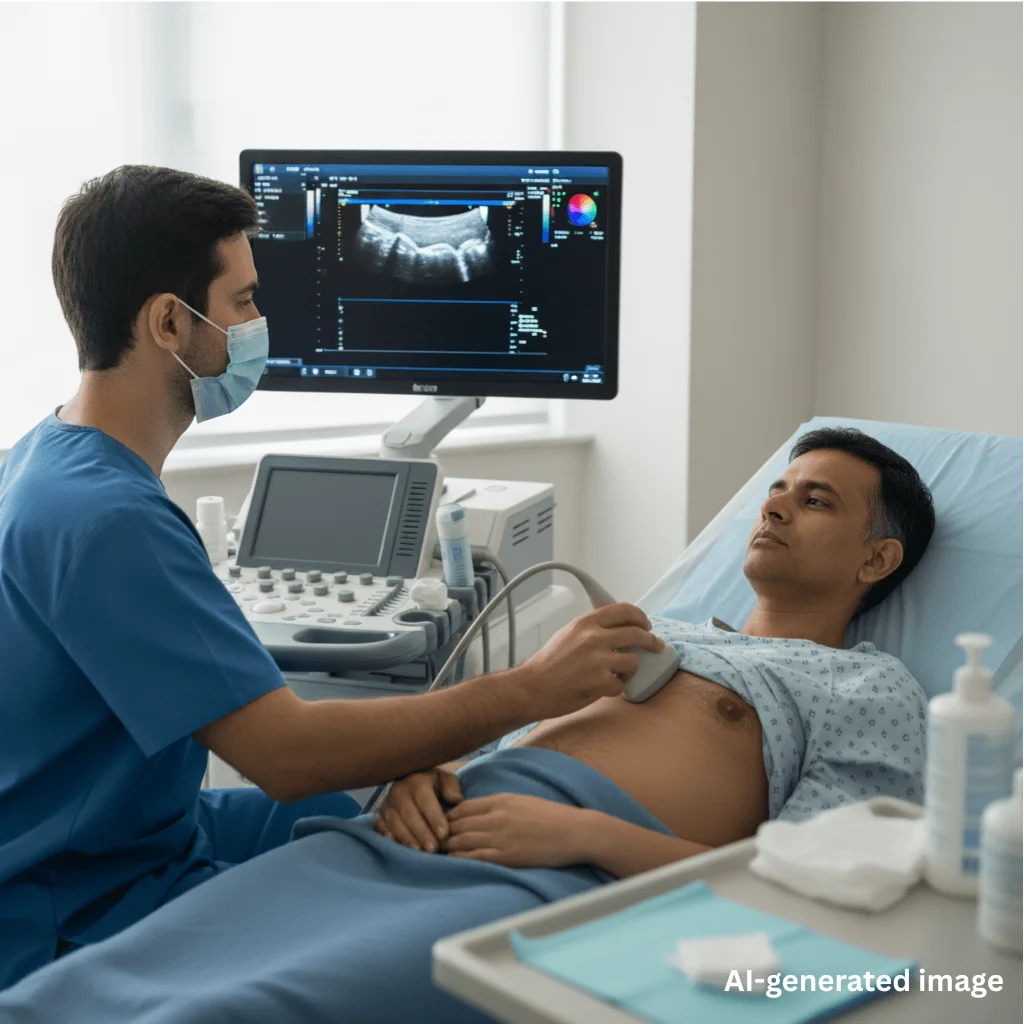
An echocardiogram, also called a 2D echo or heart sonogram, is an ultrasound test of the heart. It creates moving images of the heart’s chambers, valves, and walls, so the doctor can see how well the heart is pumping and how the valves are working.
How the Test Is Done
- Gel is applied to your chest, and a small handheld probe (transducer) is moved over the chest to record images.
- You may be asked to breathe slowly or hold your breath briefly.
- The test usually takes 20–30 minutes. It does not use radiation or needles. Most people feel only slight pressure from the probe.
- No special preparation is usually needed, and you can return to normal activities straight after.
What an Echocardiogram Can Show
- How strongly the heart is pumping (ejection fraction)
- Whether the heart valves are narrowed or leaking
- The size of the heart chambers and the thickness of the heart walls
- Fluid around the heart, or some structural heart problems present from birth
An echocardiogram does not directly show blockages in the heart arteries. Your cardiologist may advise other tests if needed, and will explain your report to you.
2. Electrocardiogram Test (ECG / EKG)
An electrocardiogram, known as an ECG or EKG, records the electrical activity of your heart. It is often one of the first tests a doctor advises when you have chest pain, palpitations, breathlessness or dizziness. It is also part of many routine health checkups.
How the Test Is Done
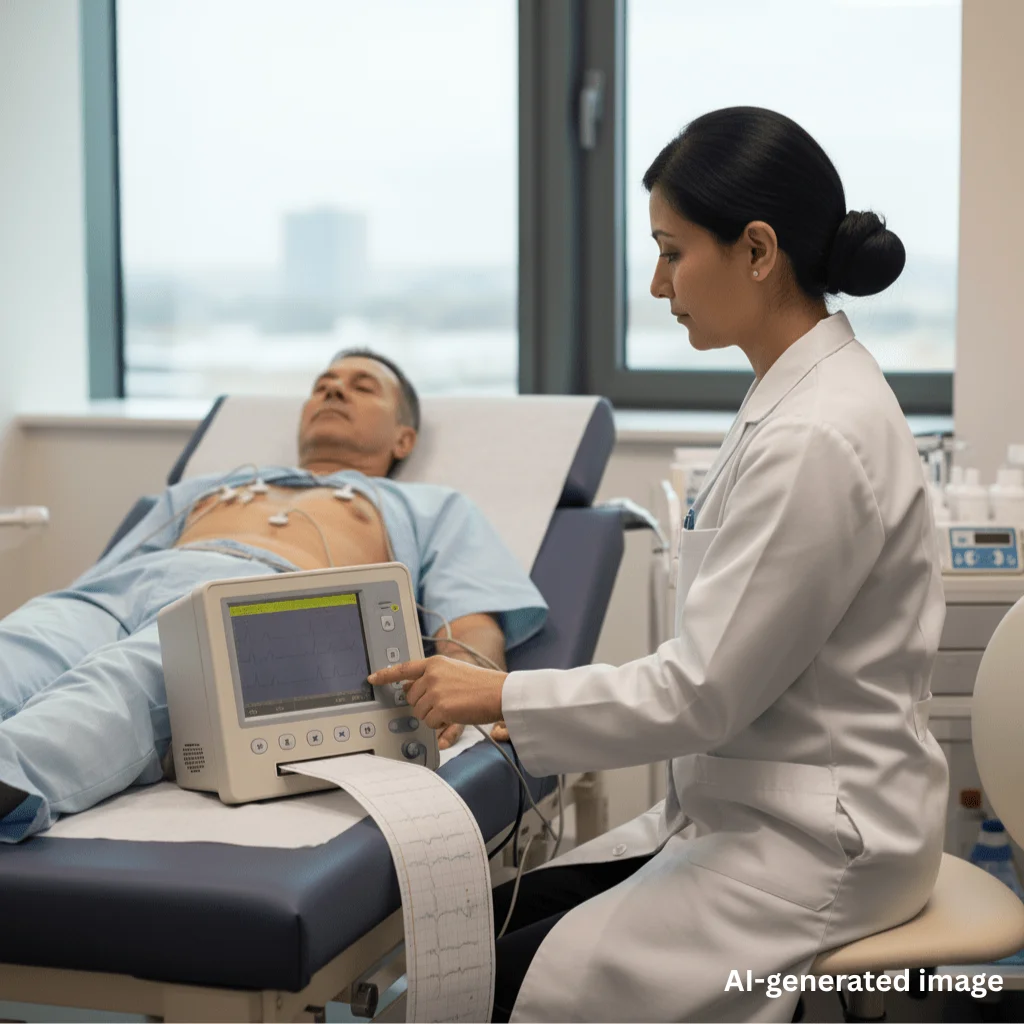
- Small sticky pads (electrodes) are placed on your chest, arms and legs.
- The machine records your heart’s electrical signals for a few seconds while you lie still.
- The test takes about 5–10 minutes. It does not pass any electricity into the body, and most people feel nothing apart from the pads being removed.
- No special preparation is needed.
What an ECG Can Show
- Heart rate and rhythm, including irregular heartbeats (arrhythmias)
- Signs of a current or past heart attack
- Signs of strain or thickening of the heart muscle
- Changes that help your doctor monitor the effect of some heart medicines
A normal ECG does not rule out all heart problems. Some rhythm problems come and go, and some blocked arteries may not show on a resting ECG. Your cardiologist may advise other tests, such as an echocardiogram, a treadmill test or Holter monitoring, if needed.
3. Treadmill Test (TMT / Exercise Stress Test)
A treadmill test (TMT), also called an exercise stress test, checks how your heart responds to physical effort. Your doctor may advise it if you have chest pain or breathlessness on exertion, or if coronary artery disease is suspected. It may also be used to check exercise capacity after heart treatment.
How the Test Is Done
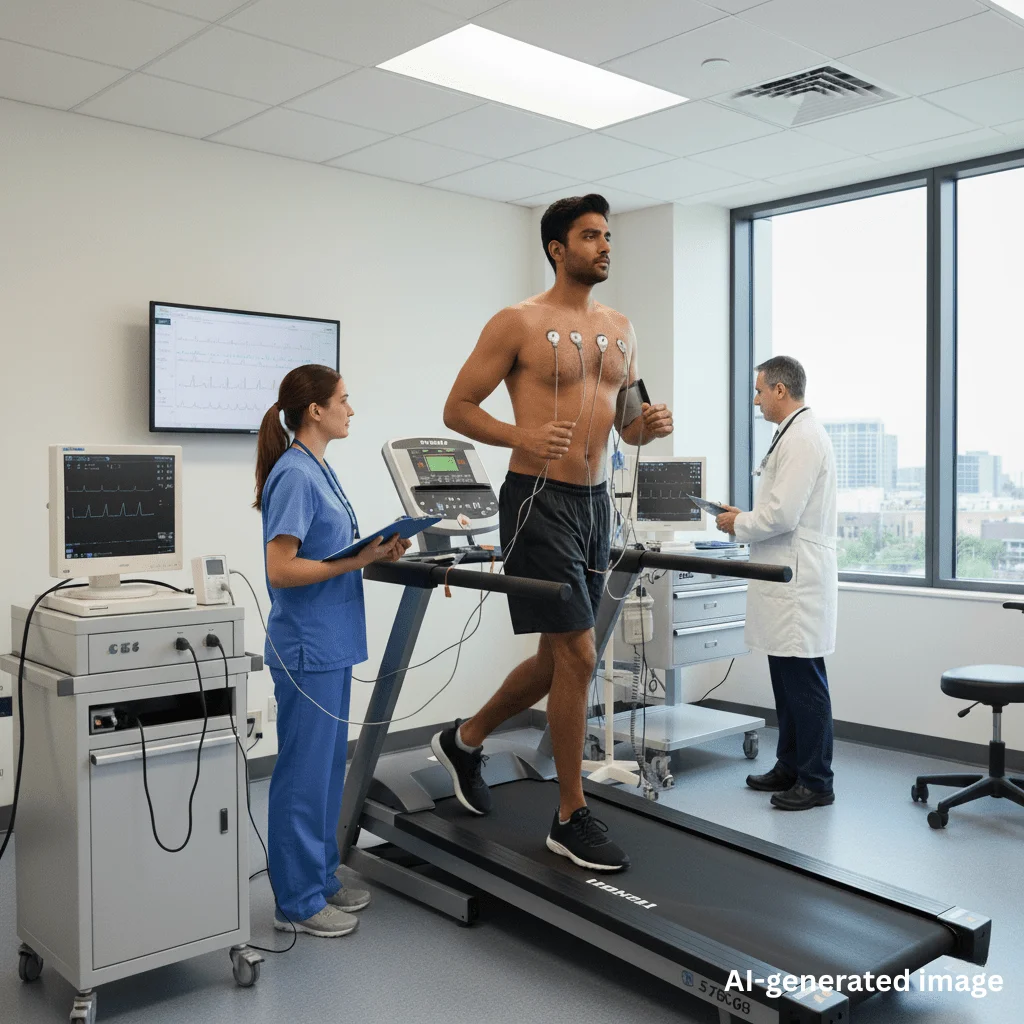
- ECG pads are placed on your chest, and a blood pressure cuff is put on your arm.
- You walk on a treadmill. The speed and incline increase every few minutes.
- Your ECG, heart rate and blood pressure are monitored throughout the test, and for a few minutes afterwards.
- The test is stopped if you feel chest pain, severe breathlessness, dizziness or exhaustion, or if the monitor shows significant changes.
- The full test usually takes 30–45 minutes, including preparation and recovery. The walking part is usually 8–12 minutes.
Before the Test
- Wear comfortable clothes and walking shoes.
- Avoid a heavy meal for 2–3 hours before the test.
- Ask your doctor whether to stop any medicines, such as beta-blockers, before the test. Do not stop any medicine on your own.
What a Treadmill Test Can Show
- Changes on the ECG during exercise that may suggest reduced blood flow to the heart
- Whether exercise brings on your symptoms, such as chest pain or breathlessness
- Your heart rate and blood pressure response to exercise, and your exercise capacity
A treadmill test does not show the arteries directly. A normal result does not completely rule out heart disease, and an abnormal result sometimes needs further tests to confirm. The test is done under medical supervision. Serious complications are uncommon, but the test is not suitable for everyone. Your doctor will decide whether it is right for you.
When Might You Need a Heart Test?
Your doctor may advise an ECG, echocardiogram, or treadmill test in situations like these.

Visit us at
AYUSHMAN HEART
& WELLNESS CENTER
Open Monday to Saturday, 8 am to 8 pm. You can book a consultation, heart test, or health checkup by phone or through this form. Our team will call you to confirm the date and time.
Service Recipient Says


Oxmox advised her not to do so, because there were thousands of bad Commas, wild Question Marks and devious.
Kolis Muller NY Citizen
Oxmox advised her not to do so, because there were thousands of bad Commas, wild Question Marks and devious.
Kolis Muller NY Citizen


Oxmox advised her not to do so, because there were thousands of bad Commas, wild Question Marks and devious.
Kolis Muller NY Citizen