

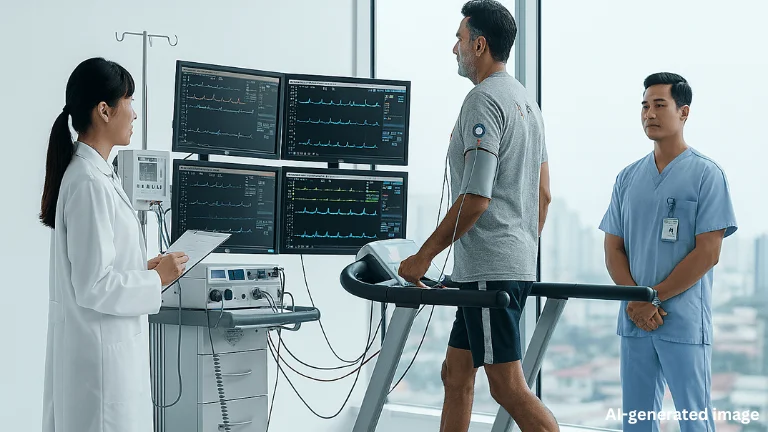
A treadmill test is one of the most widely used cardiac diagnostic tools, helping doctors assess how well your heart performs under physical stress. At Ayushman Heart & Wellness, this test is recommended for patients who experience chest discomfort or shortness of breath or are at risk of heart disease. Understanding the basics of the treadmill test can help you feel more confident and prepared before undergoing it.
What Is a Treadmill Test (TMT)?
TMT is a noninvasive cardiac examination that measures how your heart responds to exercise. While your heart works harder during physical activity, certain symptoms or changes in your ECG may reveal underlying issues that may not appear when your body is at rest.
It evaluates:
- Blood flow to the heart
- Heart rhythm patterns
- Blood pressure response
- Possible risk of coronary artery disease
Doctors often recommend a treadmill test when they suspect reduced blood supply to the heart or want to analyze your heart’s performance under stress.
How a Treadmill Test Works
TMT typically follows a standardized protocol to ensure accurate results. Here’s how it generally works:
1. Pre-Test Preparation
- The technician places small adhesive electrodes on your chest.
- These electrodes connect to an ECG machine that monitors your heart’s electrical activity.
- Your resting blood pressure and heart rate are recorded.
2. Walking Phase
- You begin walking on the treadmill at a slow speed and low incline.
- Gradually, the speed and incline increase every few minutes.
- This is meant to simulate how your heart reacts to increasing levels of physical activity.
3. Continuous Monitoring
Throughout the treadmill test, your
- ECG
- Blood pressure
- Heart rates
are continuously monitored.
Any discomfort, such as chest pain, fatigue, dizziness, or breathlessness, should be reported immediately.
4. Recovery Phase
After the exercise portion ends, you continue to be monitored for a few minutes while your heart rate gradually returns to normal.
Why Doctors Recommend a Treadmill Test
Your doctor may recommend a treadmill test for several important health reasons:
1. Detecting Coronary Artery Disease (CAD)
Blockages in the arteries supplying blood to the heart can cause reduced blood flow during exertion. It can help detect these changes early.
2. Evaluating Chest Pain
If you experience unexplained chest discomfort, the test can help identify whether the pain is heart-related.
3. Assessing Heart Rhythm Problems
The test can reveal arrhythmias that may appear only during physical stress.
4. Monitoring Cardiac Treatment Progress
Patients undergoing treatment for heart disease may need a treadmill test to evaluate how well their hearts are responding to therapies.
5. Checking Fitness Levels
Doctors may use the treadmill test to assess your cardiovascular fitness before recommending an exercise plan.
Benefits of a Treadmill Test
A treadmill test offers multiple advantages:
- Non-invasive and safe
- Provides real-time data on heart function
- Helps detect hidden heart issues
- Assists in planning treatment
- Useful for preventive health screenings
Because it involves natural physical exertion, the test gives a realistic picture of how your heart performs in daily life.
Who Should Consider a Treadmill Test?
Your doctor may suggest this test if you:
- Have risk factors like obesity, diabetes, smoking, or high blood pressure
- Experience chest tightness during activity
- Have a family history of heart disease
- Are you recovering from a heart condition and need a progress evaluation
Even if you feel healthy, a treadmill test can be valuable if you have multiple risk factors.
How to Prepare for a TMT
Follow these simple tips before your appointment:
- Wear comfortable walking shoes and light clothing.
- Avoid heavy meals. 2–3 hours before the test
- Inform your doctor about medications you are currently taking.
- Stay hydrated, but avoid excessive water intake before the test.
Being well-prepared ensures more accurate results.
Understanding Your TMT Results
After the treadmill test, your doctor will analyze:
- Heart rate trends
- ECG patterns
- Blood pressure response
- Any symptoms experienced during the test
Based on the findings, your doctor may recommend further tests, lifestyle changes, or treatment options.
Conclusion
A treadmill test is a simple, safe, and highly effective way to understand your heart’s health under stress. Whether you have symptoms or want to stay proactive about your heart wellness, this test offers valuable insights. At Ayushman Heart & Wellness, experienced cardiologists ensure the entire process is smooth, accurate, and patient-friendly. If your doctor recommends a treadmill test, consider it an important step toward protecting your long-term heart health.
