


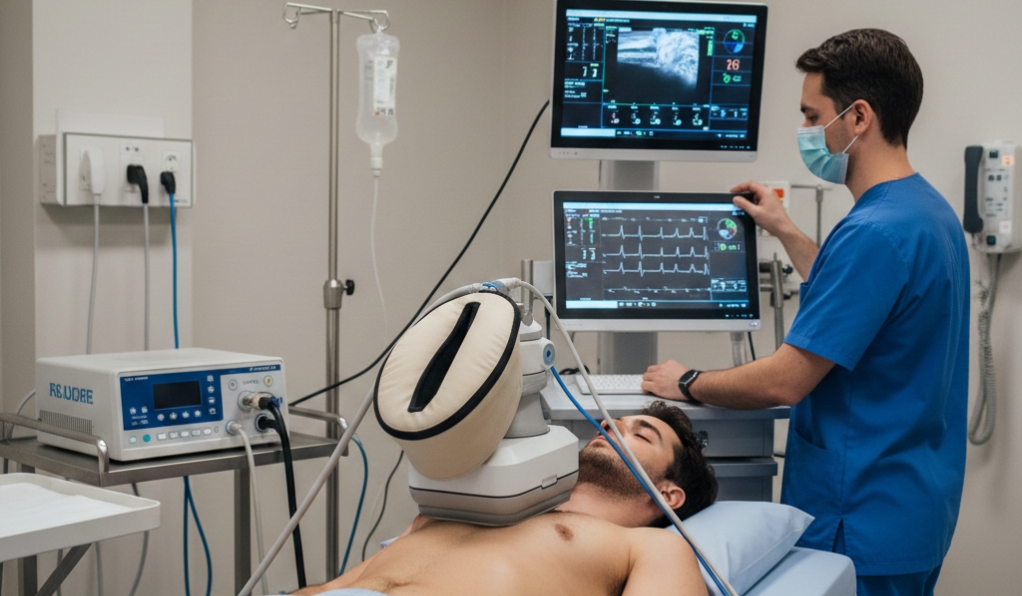
Heart blockage and chronic chest pain (angina) affect millions of people worldwide. With rising lifestyle-related heart diseases, patients are seeking safe, non-surgical alternatives to angioplasty or bypass surgery. One such advanced technology is ESMR treatment, a modern therapy used in cardiology centers across India and globally.
If you have been searching for “ESMR treatment near you” or wondering “what is ESMR treatment and how does it work?”, this blog gives you a complete, research-backed explanation.
What Is ESMR Treatment?
ESMR stands for Extracorporeal Shockwave Myocardial Revascularization.
It is a non-invasive heart therapy designed to improve blood flow in the heart without surgery, needles, stents, or hospital admission. ESMR therapy uses low-intensity shockwaves targeted to the ischemic (low blood supply) areas of the heart. These shockwaves stimulate:
- Formation of new blood vessels (angiogenesis)
- Improved oxygen supply
- Reduced chest pain
- Better exercise tolerance
In simple words, ESMR treatment helps the heart form new pathways for blood circulation, especially in areas where arteries are blocked or too small for angioplasty.
This is why ESMR is becoming an important part of ESMR cardiology, especially for patients who cannot undergo surgery.
How Does ESMR Therapy Work?
ESMR therapy works on the scientific principle of mechanotransduction. Low-intensity shockwaves create micro-mechanical stress on heart tissues. This activates the body’s natural healing response.
Step-by-step process:
- 3D Mapping of the heart is done using an echo or imaging system.
- The doctor identifies ischemic zones—areas of poor blood flow.
- A device delivers low-energy shockwaves from outside the chest.
- These waves stimulate natural angiogenesis (new blood vessel formation).
- Blood supply improves gradually over weeks.
Unlike high-energy shockwaves used in kidney stone treatment, ESMR uses gentle, low-intensity shockwaves, making it completely safe and painless.
Who Should Consider ESMR Treatment?
ESMR treatment is commonly recommended for:
- Patients with chronic stable angina
- Patients with diffuse coronary artery disease
- Patients who are not fit for angioplasty or bypass
- Patients who have already undergone multiple heart procedures
- Diabetic or elderly patients with microvascular blockages
- Patients with recurrent chest pain despite medications
If you experience chest tightness, shortness of breath, fatigue, or reduced physical capacity, your cardiologist may suggest ESMR therapy.
Benefits of ESMR Treatment
1. Non-surgical & 100% Non-invasive
No anesthesia, cuts, wounds, or hospitalization. Patients can return home immediately after each session.
2. Safe for Elderly & High-Risk Patients
ESMR works well for patients who cannot undergo angioplasty due to age, diabetes, kidney issues, or multiple blockages.
3. Reduces Chest Pain (Angina Relief)
Studies show a significant reduction in angina episodes after completing the therapy.
4. Improves Blood Flow Naturally
Shockwaves stimulate natural angiogenesis, improving oxygen supply to the heart muscles.
5. Better Quality of Life
Patients report improvement in:
- Energy levels
- Walking ability
- Breathlessness
- Overall heart performance
6. No Recovery Time
Unlike bypass surgery, ESMR therapy requires zero downtime.
7. Research-Backed Results
Worldwide cardiac studies show that ESMR therapy:
- Increases exercise tolerance
- Decreases dependency on medications
- Improves myocardial perfusion
- Enhances long-term heart health
ESMR Treatment Procedure – What to Expect
A typical ESMR treatment consists of 9 sessions, spread over 3–6 weeks, depending on the patient’s condition.
Each session includes:
- Lying comfortably on the therapy bed
- Application of gel on the chest
- Shockwave delivery for 20–25 minutes
- No pain and no side effects
Patients can immediately go home and continue daily activities.
ESMR Treatment Cost in India
One of the most frequently asked questions is about the ESMR treatment cost. The cost varies depending on the hospital, technology used, and doctor’s expertise.
Average ESMR Treatment Cost in India:
- ₹60,000 to ₹1,25,000 for the full 9-session package
- Premium cardiac hospitals may charge ₹1,50,000 or more
- Some centers offer session-wise packages
ESMR Treatment Side Effects: Is It Safe?
One major advantage of ESMR therapy is that it has minimal to no side effects. Because it is non-invasive and uses low-intensity energy, the procedure is gentle on the heart.
Possible mild side effects (rare):
- Slight tingling sensation in the chest
- Temporary fatigue
- Mild skin redness at the shockwave site
These effects resolve automatically and do not require any treatment.
Not suitable for:
- Pregnant women
- Patients with cardiac pacemakers (depending on model)
- Individuals with uncontrolled high blood pressure
Your cardiologist will assess your condition and guide you accordingly.
What Research Says About ESMR Therapy
Multiple clinical trials and global studies have tested the effectiveness of ESMR treatment.
Key Research Findings:
- Improves myocardial perfusion:
Blood flow to ischemic areas increases significantly after therapy. - Reduces angina episodes:
Patients report fewer chest pain attacks and improved mobility. - Better quality of life:
Studies published in cardiology journals show improved exercise tolerance and reduced stress levels. - Safe for long-term use:
No major complications were reported across long-term follow-ups. - Effective alternative for non-operable patients:
ESMR therapy is recognized as a strong option for patients who cannot undergo surgical interventions.
Conclusion from Research:
ESMR therapy is scientifically proven, safe, and effective for improving blood flow and reducing heart-related symptoms—in many cases, delaying or even avoiding surgery.
ESMR Treatment vs Angioplasty: Which Is Better?
| Feature | ESMR Treatment | Angioplasty |
| Procedure | Non-surgical | Surgical with a stent |
| Recovery | Immediate | 5–7 days |
| Best for | Multiple blockages / small vessels | Single large blockage |
| Side effects | Minimal | Risk of restenosis/complications |
| Cost | Lower to moderate | Higher |
Important: ESMR does not replace angioplasty in emergency cases. However, for chronic stable patients, ESMR is a powerful, safe alternative.
Who Performs ESMR Treatment?
ESMR therapy is performed by trained experts in ESMR cardiology—usually interventional cardiologists or heart specialists with expertise in advanced non-invasive cardiac treatments.
Look for centers with:
- Dedicated ESMR equipment
- Experienced cardiologists
- Good patient success stories
Final Thoughts
ESMR treatment is a breakthrough, non-invasive therapy that offers new hope for heart patients—especially those who want to avoid surgery or are not fit for invasive procedures. Backed by strong research, ESMR therapy helps in natural blood vessel formation, reduces chest pain, improves exercise capacity, and enhances overall quality of life.
With minimal side effects, no downtime, and proven long-term benefits, ESMR is emerging as a trusted alternative in modern cardiology. At Ayushman Heart & Wellness, this advanced therapy is offered with expert guidance for suitable patients.
If you’re exploring safe, effective heart care options, speak to a specialist to understand whether ESMR therapy is right for you.
✅ FAQ Section
1. What is ESMR treatment?
ESMR treatment (Extracorporeal Shockwave Myocardial Revascularization) is a non-invasive heart therapy that uses low-intensity shockwaves to improve blood flow in areas of the heart with reduced circulation. It is mainly recommended for chronic angina or patients who are not fit for surgery.
2. How does ESMR therapy work?
ESMR therapy stimulates natural angiogenesis—meaning it helps the body form new blood vessels. This improves oxygen supply to the heart, reduces chest pain, and enhances exercise tolerance.
3. Who is the ideal candidate for ESMR treatment?
ESMR is suitable for patients with chronic stable angina, microvascular disease, multiple blockages, or those who cannot undergo angioplasty or bypass surgery due to medical risks.
4. Is ESMR treatment safe?
Yes. ESMR is considered safe, non-invasive, and painless. It uses low-intensity shockwaves, which makes it suitable even for elderly and high-risk patients.
5. What are the side effects of ESMR treatment?
ESMR treatment side effects are minimal. Some patients may experience mild chest tingling, slight skin redness, or temporary fatigue—all of which resolve on their own.
6. How long does an ESMR session take?
Each session lasts 20–25 minutes. A complete ESMR program typically includes 9 sessions over 3–6 weeks, depending on the patient’s condition.
