

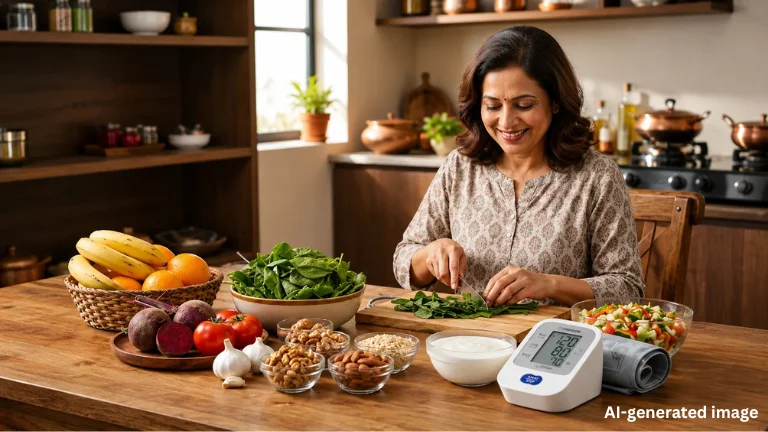
High blood pressure, also known as hypertension, is one of the most common health conditions affecting adults worldwide. Often called the “silent killer,” it can develop without noticeable symptoms while increasing the risk of heart disease, stroke, kidney disease, and other serious complications. Fortunately, making healthier food choices can play a significant role in supporting healthy blood pressure levels.
If you’re wondering what foods can naturally lower blood pressure, the answer lies in a balanced eating pattern that emphasizes nutrient-rich whole foods. Certain foods are naturally high in potassium, magnesium, calcium, fiber, antioxidants, and heart-healthy fats—all nutrients that help support normal blood vessel function and overall cardiovascular health.
At Ayushman Heart & Wellness, we believe that prevention begins with informed lifestyle choices. While healthy eating is not a replacement for prescribed medications, it is an important part of long-term heart health management.
Which Foods Naturally Lower Blood Pressure?
Foods that may help support healthy blood pressure include:
- Leafy green vegetables
- Berries
- Bananas
- Oats
- Fatty fish
- Beetroot
- Low-fat dairy products
- Beans and lentils
- Nuts and seeds
- Olive oil
These foods are commonly recommended as part of heart-healthy dietary patterns, including the DASH (Dietary Approaches to Stop Hypertension) eating plan.
Why Diet Matters for Blood Pressure
Every meal you eat affects your cardiovascular system. Diets high in sodium, processed foods, saturated fats, and added sugars can contribute to elevated blood pressure over time. On the other hand, foods rich in essential minerals help your body regulate fluid balance, improve blood vessel function, and support healthy circulation.
Research has consistently shown that adopting a heart-friendly eating pattern can contribute to healthier blood pressure levels. One of the most well-known approaches is the DASH Eating Plan, developed to encourage the consumption of fruits, vegetables, whole grains, lean proteins, and low-fat dairy while limiting sodium and processed foods.
Best Foods That May Naturally Support Healthy Blood Pressure
1. Leafy Green Vegetables
Leafy greens are among the best foods for heart health because they’re naturally rich in potassium. Potassium helps balance the effects of sodium by supporting healthy fluid regulation within the body.
Examples include:
- Spinach
- Kale
- Swiss chard
- Collard greens
- Mustard greens
Adding one or two servings of leafy vegetables to your daily meals can be an easy way to increase your intake of heart-supporting nutrients.
Pro Tip: Add fresh spinach to smoothies, salads, soups, or omelets.
2. Berries
Blueberries, strawberries, raspberries, and blackberries are packed with antioxidants called flavonoids. These plant compounds support healthy blood vessel function and may contribute to better cardiovascular health when consumed regularly.
Berries also provide:
- Vitamin C
- Fiber
- Polyphenols
- Natural antioxidants
Fresh or frozen berries can be enjoyed with oatmeal, yogurt, or as a healthy snack.
3. Bananas
Bananas are one of the most convenient natural sources of potassium. Adequate potassium intake helps maintain the body’s electrolyte balance and supports healthy blood pressure regulation.
Besides potassium, bananas also provide:
- Vitamin B6
- Fiber
- Natural carbohydrates for energy
They make an excellent breakfast addition or post-workout snack.
4. Oats
Whole oats contain soluble fiber, particularly beta-glucan, which supports heart health and healthy cholesterol levels.
A bowl of oatmeal prepared without excessive sugar can become a heart-friendly breakfast by adding:
- Fresh berries
- Chopped walnuts
- Flaxseeds
- Cinnamon
Choosing minimally processed whole oats is generally more beneficial than instant flavored varieties.
5. Beetroot
Beetroot contains naturally occurring dietary nitrates. Inside the body, these compounds are converted into nitric oxide, which helps blood vessels relax and supports healthy circulation.
Ways to include beetroot:
- Fresh beet salad
- Roasted beets
- Beetroot juice (without added sugar)
- Smoothies
Beetroot also provides:
- Folate
- Potassium
- Fiber
- Vitamin C
6. Fatty Fish
Fatty fish such as salmon, sardines, trout, and mackerel are excellent sources of omega-3 fatty acids.
Omega-3 fats help support:
- Heart health
- Healthy blood vessel function
- Normal inflammatory response
- Overall cardiovascular wellness
Health experts often recommend eating fish at least twice per week as part of a balanced diet.
For individuals who do not consume fish, discussing alternative omega-3 sources with a healthcare provider may be beneficial.
7. Low-Fat Dairy Products
Milk, yogurt, and other low-fat dairy foods provide calcium, potassium, and protein—all nutrients associated with cardiovascular health.
Unsweetened yogurt topped with berries and nuts makes a nutritious snack that supports a balanced eating pattern.
When choosing dairy products, opt for lower-fat and lower-sodium varieties whenever possible.
8. Beans and Lentils
Beans and lentils are nutritional powerhouses packed with plant-based protein, fiber, potassium, and magnesium. These nutrients work together to support heart health and help maintain healthy blood pressure levels as part of a balanced diet.
Some excellent options include:
- Black beans
- Kidney beans
- Chickpeas
- Lentils
- Pinto beans
Adding beans or lentils to soups, salads, curries, or grain bowls is an easy way to increase your fiber intake while supporting cardiovascular wellness.
9. Nuts and Seeds
Nuts and seeds are rich in healthy fats, magnesium, fiber, and plant protein. Regularly eating moderate portions may contribute to overall heart health.
Some of the best choices include:
- Almonds
- Walnuts
- Pistachios
- Chia seeds
- Flaxseeds
- Pumpkin seeds
Flaxseeds and chia seeds also provide omega-3 fatty acids, making them a valuable addition to smoothies, yogurt, or oatmeal.
Tip: Choose unsalted varieties to avoid excess sodium.
10. Olive Oil
Extra virgin olive oil is one of the healthiest cooking oils available. It contains heart-friendly monounsaturated fats and antioxidants that support healthy blood vessels.
Instead of butter or highly processed oils, try using olive oil for:
- Salad dressings
- Roasted vegetables
- Light sautéing
- Whole-grain dishes
Using olive oil as part of a Mediterranean-style eating pattern may help support long-term cardiovascular health.
11. Garlic
Garlic has been used in traditional diets for centuries. It contains natural compounds such as allicin, which may help support normal blood vessel function.
Fresh garlic can be added to:
- Soups
- Vegetable dishes
- Homemade sauces
- Whole-grain pasta
- Stir-fries
While garlic may offer health benefits, it should not replace prescribed treatment for hypertension.
12. Dark Chocolate (In Moderation)
Dark chocolate containing 70% cocoa or higher contains flavonoids that support healthy blood vessel function.
Enjoy it occasionally in small portions, as chocolate can also contain added sugar and calories.
A small square after dinner can satisfy sweet cravings while fitting into a balanced eating plan.
Foods to Limit for Better Blood Pressure Management
Knowing what foods can naturally lower blood pressure is only part of the equation. Reducing foods that contribute to high blood pressure is equally important.
Try limiting:
- Highly processed foods
- Fast food
- Packaged snacks
- Processed meats
- Sugary beverages
- Excess sweets
- Foods high in saturated fat
- High-sodium canned products
Reading nutrition labels and preparing more meals at home can help reduce sodium intake.
Sample Heart-Healthy Meal Plan
Here’s a simple example of a day’s meals inspired by heart-healthy eating principles.
Breakfast
- Oatmeal topped with blueberries, banana slices, and chia seeds
- Low-fat milk
Mid-Morning Snack
- Unsalted almonds
- Fresh apple
Lunch
- Grilled salmon
- Brown rice
- Steamed spinach
- Mixed vegetable salad with olive oil dressing
Afternoon Snack
- Plain yogurt with strawberries
Dinner
- Lentil soup
- Mixed green salad
- Roasted vegetables
- Whole-grain bread
Evening Snack
- A small piece of dark chocolate (70% cocoa or higher)
This balanced meal pattern provides fiber, potassium, healthy fats, and lean protein while helping reduce excess sodium.
Lifestyle Tips to Support Healthy Blood Pressure
Healthy eating works best when combined with other positive lifestyle habits.
Consider these heart-friendly practices:
- Stay physically active most days of the week.
- Maintain a healthy body weight.
- Limit sodium intake.
- Drink enough water throughout the day.
- Get adequate sleep each night.
- Manage stress through relaxation techniques.
- Avoid smoking and limit alcohol consumption.
- Take medications exactly as prescribed by your healthcare provider.
Regular blood pressure monitoring is also important, especially if you have hypertension or other cardiovascular risk factors.
Frequently Asked Questions (FAQs)
What foods naturally lower blood pressure quickly?
There is no single food that lowers blood pressure instantly. However, consistently eating potassium-rich fruits, leafy greens, whole grains, beans, low-fat dairy, and heart-healthy fats may help support healthy blood pressure over time when combined with an overall healthy lifestyle.
Is the DASH eating plan good for high blood pressure?
Yes. The DASH (Dietary Approaches to Stop Hypertension) eating plan is widely recognized for promoting heart-healthy eating habits. It emphasizes fruits, vegetables, whole grains, lean proteins, low-fat dairy, and reduced sodium intake.
Which fruit is best for blood pressure?
Several fruits support heart health, including:
- Bananas
- Berries
- Oranges
- Kiwi
- Avocados
- Pomegranates
Eating a variety of fruits provides important vitamins, minerals, fiber, and antioxidants.
Can diet replace blood pressure medication?
No. Healthy eating supports blood pressure management but should not replace medications prescribed by your healthcare provider. Always consult your physician before making changes to your treatment plan.
How much sodium should I consume?
Most health organizations recommend limiting sodium intake, particularly for individuals with hypertension. Choosing fresh foods instead of processed options is one of the easiest ways to reduce sodium consumption.
Conclusion
Understanding what foods can naturally lower blood pressure empowers you to make healthier daily choices for your heart. While no single food is a cure for hypertension, a balanced eating pattern rich in fruits, vegetables, whole grains, lean proteins, legumes, nuts, seeds, low-fat dairy, and healthy fats can support healthy blood pressure and overall cardiovascular wellness.
At Ayushman Heart & Wellness, we encourage a comprehensive approach to heart health that combines nutritious eating, regular physical activity, routine health check-ups, stress management, and medical guidance when needed. Small, consistent lifestyle changes today can contribute to a healthier heart for years to come.
