

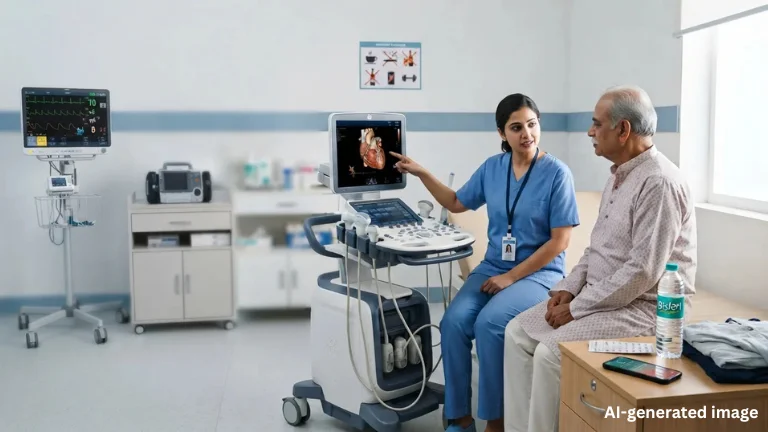
Before an echocardiogram, avoid heavy meals, caffeine, smoking, and strenuous exercise for at least 2-3 hours prior. Don’t apply lotion or oil to your chest, and don’t skip your regular medications unless your doctor advises otherwise. Wear loose, comfortable clothing and arrive a few minutes early to relax before the test.
An echocardiogram is a simple, painless ultrasound test that shows how your heart is pumping, beating, and functioning. At Ayushman Heart & Wellness, we perform hundreds of echocardiograms every month, and patients often ask what they should avoid doing beforehand to get the clearest, most accurate results. Here’s everything you need to know.
1. Don’t Eat a Heavy Meal Right Before the Test
A large or heavy meal, especially one high in fat, can sometimes make you feel bloated or short of breath, which affects your comfort during the scan. While most standard echocardiograms don’t require fasting, it’s best to eat a light meal 2-3 hours before your appointment. If your doctor has ordered a stress echocardiogram, you may be asked to fast for 4-6 hours beforehand, so always confirm specific instructions with your care team.
2. Avoid Caffeine and Stimulants
Coffee, tea, energy drinks, and chocolate contain caffeine, which can temporarily increase your heart rate and blood pressure. This is especially important to avoid before a stress echocardiogram, where accurate baseline heart rate readings are essential. As a rule, skip caffeine for at least 4-6 hours before your test.
3. Don’t Smoke Before Your Appointment
Nicotine constricts blood vessels and raises heart rate, which can distort the readings your cardiologist relies on. Avoid smoking or using nicotine products for at least 2-3 hours before your echocardiogram.
4. Skip Strenuous Exercise Beforehand
Unless your test specifically requires physical exertion (as with a stress echo), avoid intense workouts, running, or heavy lifting right before your appointment. Exercise raises your heart rate and can make it harder for the sonographer to capture a clear, resting image of your heart.
5. Don’t Apply Lotion, Oil, or Powder to Your Chest
During the test, small sensor pads (electrodes) and an ultrasound probe are placed directly on your chest. Lotions, oils, powders, or heavy moisturizers can interfere with electrode contact and probe movement, so it’s best to keep your chest skin clean and product-free on the day of your test.
6. Don’t Wear Restrictive or Layered Clothing
You’ll need to expose your chest area for the test, so avoid one-piece outfits, dresses that are hard to remove, or clothing with excessive layers. Loose, two-piece clothing makes the process quicker and more comfortable.
7. Don’t Stop Your Medications Without Medical Advice
Unless your cardiologist specifically instructs you to hold certain medications, continue taking your regular prescriptions as usual, especially blood pressure or heart medications. Stopping medication on your own can affect both your health and the accuracy of your results. Always clarify with your doctor if a specific test (like a stress echo) requires temporary adjustments.
8. Avoid Excess Alcohol the Night Before
Alcohol can affect your heart rate and blood pressure readings. It’s best to avoid alcohol for at least 24 hours before your echocardiogram for the most accurate results.
9. Don’t Arrive Rushed or Anxious
Stress and rushing can elevate your heart rate right before the test. Try to arrive 10-15 minutes early, breathe normally, and give yourself time to settle in before the sonographer begins.
Frequently Asked Questions
Do I need to fast before a routine echocardiogram?
No, fasting isn’t usually required for a standard resting echocardiogram. Fasting is typically only needed for stress echocardiograms.
Can I drink water before the test?
Yes, normal water intake is fine and encouraged before a routine echocardiogram.
How long does an echocardiogram take?
Most echocardiograms take between 30 to 60 minutes, depending on the type of scan ordered.
Is an echocardiogram painful?
No, it’s a painless, non-invasive procedure using ultrasound waves. You may feel slight pressure from the probe, but there is no pain involved.
Can I take my heart medications on the day of the test?
Yes, generally you should continue your medications unless your doctor specifically tells you otherwise for a particular test type.
Book Your Echocardiogram at Ayushman Heart & Wellness
Proper preparation ensures your cardiologist gets the clearest possible picture of your heart health. At Ayushman Heart & Wellness, our experienced sonographers and cardiac specialists guide you through every step of the process, so you feel comfortable and informed from start to finish.
If you have an upcoming echocardiogram or want to schedule one, contact Ayushman Heart & Wellness today for expert cardiac care you can trust.
