

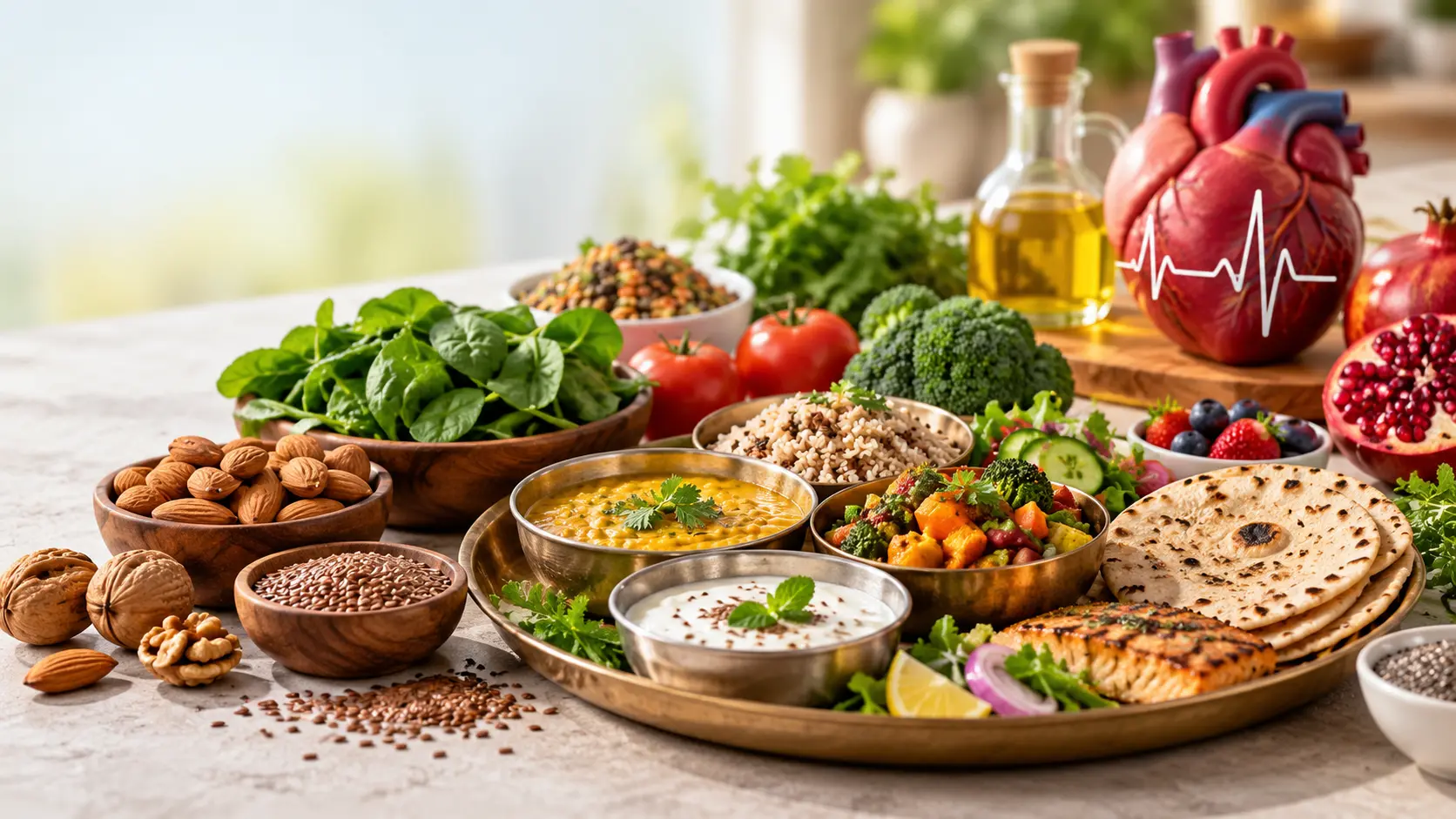
The best Indian foods for better heart health include vegetables, fruits, whole grains, pulses, nuts, seeds, and healthy sources of fats. Traditional foods such as oats, dal, brown rice, roti made with whole wheat, leafy vegetables, beans, and fresh fruits can support a balanced heart-friendly diet when prepared with limited salt, sugar, and unhealthy fats.
Key Takeaways
- Choose more vegetables and seasonal fruits.
- Include whole grains such as oats, brown rice, and whole wheat.
- Eat dal, beans, and other pulses regularly.
- Add nuts and seeds in moderate amounts.
- Prefer healthy cooking oils and avoid excessive fried foods.
- Reduce excess salt, sugar, and processed foods.
Why Does Food Matter for Heart Health?
Your daily diet can play an important role in maintaining cardiovascular health. Eating a balanced diet can help support healthy cholesterol levels, blood pressure, body weight, and overall heart function.
Indian cuisine offers many naturally nutritious ingredients. The key is choosing the right foods and preparing them in a heart-friendly way. For example, dal can be a healthy source of plant protein, but adding excessive ghee or salt can change the nutritional value of the meal.
A heart-friendly Indian diet does not mean giving up traditional food. It means making smarter choices about ingredients, portions, and cooking methods.
Best Indian Foods for Better Heart Health
1. Leafy Green Vegetables
Spinach, methi, coriander, drumstick leaves, and other green vegetables are nutritious additions to your diet. They provide fiber, vitamins, minerals, and other beneficial plant compounds.
Try adding leafy vegetables to dal, sabzi, soups, or whole-wheat meals instead of relying heavily on fried side dishes.
2. Fresh Fruits
Fruits such as apples, oranges, guava, papaya, pomegranate, and bananas can be part of a balanced diet. They provide fiber, vitamins, minerals, and naturally occurring plant compounds.
Choose whole fruits instead of packaged fruit juices, which can contain added sugar and provide less fiber.
3. Dal and Pulses
Dal, rajma, chana, moong, and other pulses are excellent staples in Indian meals. They provide plant-based protein and dietary fiber.
Including pulses regularly can make meals more filling while helping you reduce dependence on highly processed or fatty protein sources.
4. Whole Grains
Whole grains such as oats, brown rice, barley, millets, and whole wheat can provide more fiber than refined grains.
You can make simple changes such as choosing whole-wheat roti instead of refined flour products or including millet and brown rice in your meals.
5. Nuts and Seeds
Almonds, walnuts, flaxseeds, chia seeds, and sunflower seeds can be included in moderate portions. Nuts and seeds provide healthy fats, protein, fiber, and several micronutrients.
A small handful of unsalted nuts can be a convenient snack. Avoid heavily salted, sugar-coated, or deep-fried versions.
6. Garlic and Other Flavorful Ingredients
Garlic, ginger, turmeric, coriander, cumin, and other Indian spices can add flavor without requiring large amounts of salt.
However, spices should complement a healthy diet rather than be considered a replacement for medical treatment or prescribed medicines.
Heart-Healthy Indian Meal Ideas
Making your regular meals healthier can be simple. Here are a few practical combinations:
- Breakfast: Vegetable oats or vegetable poha with a serving of fruit.
- Lunch: Whole-wheat roti, dal, mixed vegetable sabzi, and salad.
- Evening snack: Unsalted nuts with fresh fruit.
- Dinner: Vegetable khichdi with dal and a side of vegetables.
- Alternative: Brown rice with rajma or chana and a fresh salad.
The exact food choices and portions should depend on your individual nutritional needs, activity level, and health conditions.
Foods to Limit for Better Heart Health
While adding nutritious foods is important, limiting certain foods also matters. Try to reduce:
- Deep-fried snacks and fast food
- Excessively salty foods
- Processed meats
- Sugary drinks and sweets
- Refined flour products
- Packaged snacks high in salt or saturated fat
- Meals prepared with excessive butter, ghee, or oil
You do not necessarily need to eliminate every traditional food from your diet. Focus on moderation, portion control, and healthier preparation methods.
How to Make Your Indian Diet More Heart-Friendly
Small changes can make everyday meals healthier:
- Add at least one vegetable to your main meals.
- Choose whole grains more often.
- Include dal or other pulses regularly.
- Keep nuts and seeds unsalted and portion-controlled.
- Reduce the amount of salt used during cooking.
- Prefer steaming, grilling, roasting, or lightly cooking over deep-frying.
- Choose water or unsweetened beverages instead of sugary drinks.
- Maintain regular physical activity along with a balanced diet.
When Should You Talk to a Heart Specialist?
Diet is only one part of heart health. People with high blood pressure, high cholesterol, diabetes, obesity, existing heart disease, or a strong family history of heart problems may need personalized medical and dietary guidance.
If you experience symptoms such as chest discomfort, unexplained shortness of breath, fainting, or sudden severe weakness, seek medical attention promptly.
For personalized guidance and heart-focused care, you can consult Ayushman Heart & Wellness and discuss your individual risk factors, lifestyle, and dietary needs with a qualified healthcare professional.
FAQs
What is the best Indian food for heart health?
There is no single best food for heart health. A balanced diet containing vegetables, fruits, whole grains, pulses, nuts, and seeds is a better approach than relying on one food.
Is dal good for the heart?
Dal can be a nutritious part of a heart-friendly diet because it provides plant-based protein and fiber. Choose preparations with moderate amounts of salt, oil, and added fats.
Which Indian snacks are better for heart health?
Fresh fruit, unsalted nuts, roasted chana, or lightly prepared homemade snacks can be better choices than deep-fried or highly processed snacks.
Is rice bad for heart health?
Rice can be included in a balanced diet. Choosing appropriate portions and including whole grains such as brown rice or other high-fiber options more often can support a balanced eating pattern.
Can a healthy diet prevent heart disease?
A healthy diet can help manage several cardiovascular risk factors, but it cannot guarantee prevention. Regular physical activity, avoiding tobacco, managing stress, and getting appropriate health check-ups are also important.
Conclusion
Better heart health starts with consistent everyday choices. Indian foods such as vegetables, fruits, dal, pulses, whole grains, nuts, and seeds can form the foundation of a nutritious diet. At the same time, limiting excess salt, sugar, fried foods, and unhealthy fats can make traditional meals more heart-friendly.
If you are concerned about your heart health or have existing risk factors, professional guidance can help you create a plan suited to your needs. Ayushman Heart & Wellness can help you understand your heart health and make informed lifestyle choices.
