

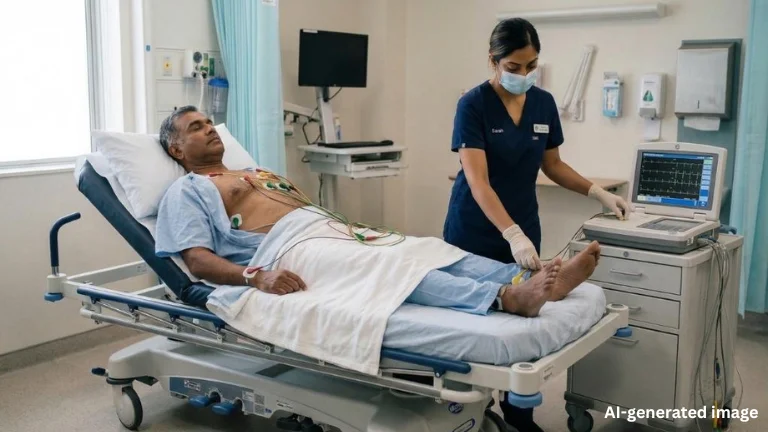
When your doctor recommends an Electrocardiogram Test, you are left wondering what the doctor wants to see. Is it just about heart rate? Or something more serious?
The fact is–this is a non-invasive test, simple and easy to perform, which can tell more than most people want to know. Since the early signs of heart disease are recognized when the regular heart rhythms are abnormal, the Electrocardiogram Test results are an important part of cardiac care in the modern context.
Let’s break it down in a clear, conversational way so you understand what matters—and why.
What Is an Electrocardiogram Test and Why Is It Done?
An electrocardiogram test (ECG or EKG) is a recording of the heart’s electrical activity. Each heartbeat produces electrical impulses, and this test records the impulses in the form of waves.
Doctors recommend it when you:
- Complaints of chest pain or discomfort.
- Experience abnormal heartbeats (palpitations).
- Feel dizzy or have unexplained fatigue
- Past heart disease.
At healthcare centers like Ayushman Heart and Wellness, ECG tests have been the norm when it comes to testing the health of the heart since it is a fast, painless, and very informative test.
What Do Electrocardiogram Test Results Show?
Your Electrocardiogram Test results are presented in a graph form, with the waves- each of them represents a stage of your heartbeat.
Doctors analyze:
- Heart rate (too fast, too slow, or normal)
- Rhythm consistency
- Electrical signal timing
- Any unusual patterns
The slight fluctuations in such waves can indicate some problems.
5 Abnormalities Doctors Look For in an Electrocardiogram Test
1. Irregular Heart Rhythm (Arrhythmia)
An abnormal rhythm is one of the most prevalent results in an Electrocardiogram Test.
This may include:
- Skipped beats
- Rapid heartbeat
- Slow heartbeat
Arrhythmias may be harmless or may be signs of serious illnesses that need additional examination.
2. Signs of a Previous or Ongoing Heart Attack
Yes, an ECG can reveal whether you’ve had a heart attack—even if you didn’t realize it.
Electrocardiogram Test results may show:
- Damaged heart muscle patterns
- The decreased electrical activity of some areas.
That is why it is common to have to perform ECGs in emergencies.
3. Poor Blood Flow to the Heart (Ischemia)
If your heart isn’t getting enough oxygen-rich blood, it can be clearly seen on an ECG.
Doctors look for:
- ST-segment changes
- T-wave abnormalities
Such changes can be signs of suffocation of arteries or heart disease at an early stage.
4. Enlarged Heart Chambers
ECG may indicate that some of your heart is enlarged as a result of high blood pressure or otherwise.
This may be reflected in:
- Increased wave amplitude
- Altered signal patterns
Although additional examination might be required, the Electrocardiogram Test is a valuable starting indication.
5. Electrolyte Imbalances
Surprisingly, your heartbeat is directly linked to the electrolyte levels in your body.
Excessive or decreased amounts of potassium or calcium may influence:
- Wave shapes
- Signal timing
To verify this, doctors tend to match the results of the Electrocardiogram Test with blood tests.
How Accurate Is an Electrocardiogram Test for Detecting Heart Problems?
The electrocardiogram test is very effective in identifying the problems of rhythm and acute cardiac incidents.
However:
- It is not able to reveal every heart condition.
- Some issues appear only during activity or stress
This is why the doctors can prescribe further tests when necessary.
Can Electrocardiogram Test Results Be Normal Even If There Is a Problem?
Yes, and this is important to understand.
A normal electrocardiogram test does not necessarily eliminate the presence of heart disease. Some conditions:
- Occur intermittently
- Don’t affect electrical activity directly
In case the symptoms continue, your doctor can recommend additional tests such as stress tests or images.
What Should You Do If Your Electrocardiogram Test Results Are Abnormal?
First—don’t panic.
Abnormal Electrocardiogram Test results do not necessarily indicate an issue of grave concern. They just say that something should be paid more attention to.
Next steps may include:
- Repeat ECG
- Blood tests
- Echocardiogram
- Lifestyle evaluation
In Ayushman Heart and Wellness, specialists aim to decode the ECG results and compare them with the symptoms and general well-being of the patient so that the diagnosis can be more precise.
Is an Electrocardiogram Test Painful or Risky?
Not at all.
The Electrocardiogram Test is:
- Completely painless
- Non-invasive
- Safe for all age groups
Electrodes are placed on your skin, and the test usually takes just a few minutes.
How Long Does It Take to Get Electrocardiogram Test Results?
The results of the Electrocardiogram Test can be obtained instantly in most instances.
Doctors can often:
- Review results on the spot
- Elaborate on the results during the visit
This renders ECG one of the quickest diagnosis tools in the field of cardiology.
Who Should Get an Electrocardiogram Test Done Regularly?
You should consider routine ECGs if you:
- Have high blood pressure
- Have diabetes
- family history of heart disease
- Are above 40 years of age
- Experience frequent fatigue or chest discomfort
Regular monitoring helps detect issues early—before they become serious.
Can Lifestyle Changes Improve Abnormal ECG Results?
In many cases, yes.
Lifestyle can be effectively used to improve the heart:
- Eating a balanced diet
- Exercising regularly
- Managing stress
- Avoiding smoking
Although not everything abnormal can be fixed, it is possible to achieve better results with the help of improved habits.
Why Early Detection Through Electrocardiogram Test Matters
Heart diseases tend to manifest in silence. The condition can be advanced by the time the symptoms are experienced.
The Electrocardiogram Test helps:
- Detect problems early
- Prevent complications
- Guide timely treatment
It is the reason why it is an essential component of preventive cardiac care.
Don’t Ignore the Signals Your Heart Sends
Your heart speaks more than you imagine–and the Electrocardiogram Test is one of the easiest methods of knowing what it is saying.
It can be either detecting abnormal rhythms or detecting a warning sign; prompt testing can prove to be critical. At Ayushman Heart and Wellness, it is about the combination of proper diagnosis with individual care, which means being aware, active, and in charge of your heart.
Because when it comes to your heart, early attention isn’t just helpful—it’s essential.
