

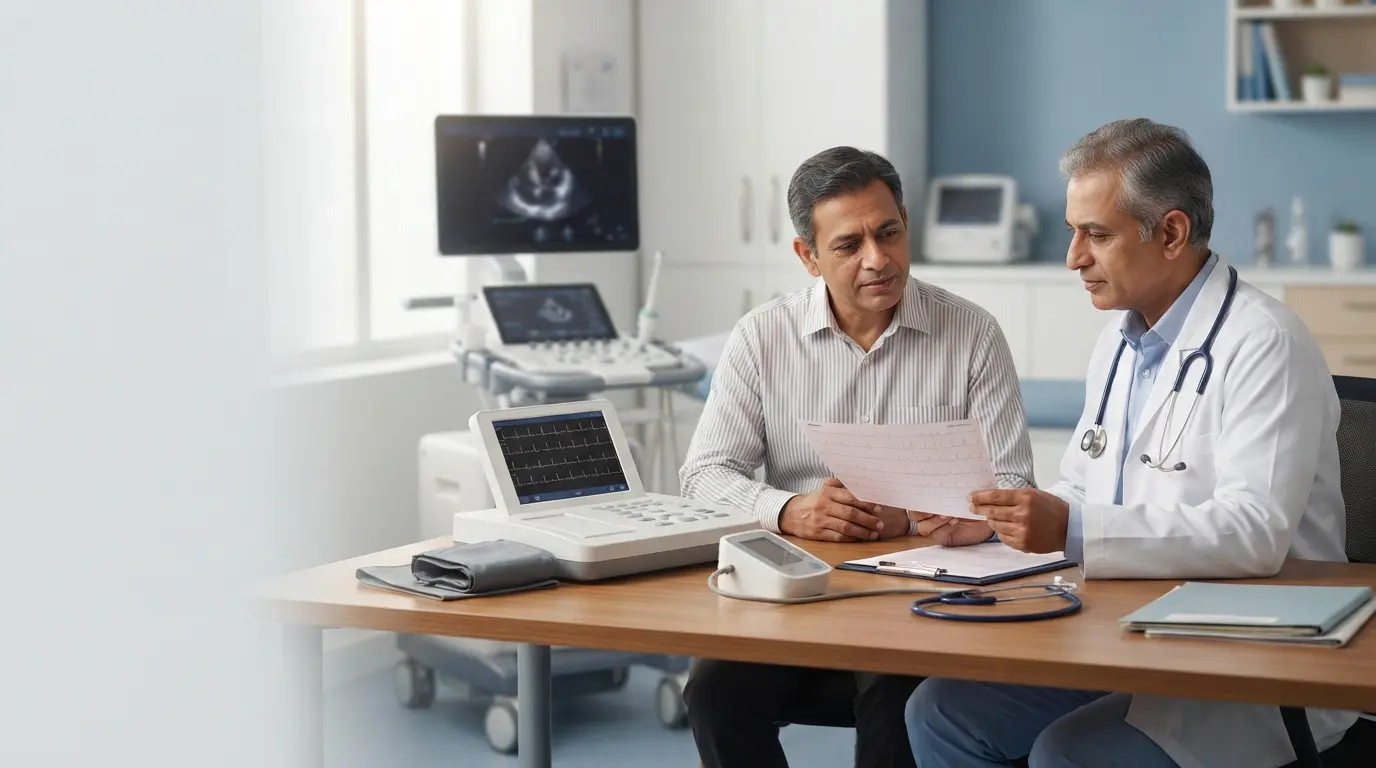
During your first visit, a cardiologist usually starts with your medical history, symptoms, blood pressure, pulse, and physical examination. Depending on your health and symptoms, the doctor may recommend tests such as an ECG, blood tests, echocardiogram, stress test, or other heart-related investigations.
Key Takeaways
- Your first heart consultation usually begins with a detailed medical history and physical examination.
- An ECG is one of the most common tests used to check heart rhythm and electrical activity.
- Blood tests can help identify cholesterol, blood sugar, and other factors linked to heart health.
- Additional tests are recommended based on your symptoms, age, medical history, and risk factors.
- A heart specialist may not recommend every test for every patient.
What Happens During Your First Cardiology Visit?
Visiting a cardiologist does not always mean you need several tests immediately. The doctor first tries to understand your symptoms and overall heart health.
A heart specialist may ask about chest discomfort, breathlessness, dizziness, palpitations, tiredness, swelling in the legs, or changes in your exercise tolerance. Your family history, lifestyle, medications, blood pressure, diabetes, cholesterol, and previous medical conditions may also be discussed.
After this assessment, the doctor decides whether further testing is needed.
Common Tests a Cardiologist May Recommend
1. Electrocardiogram (ECG)
An ECG records the electrical activity of your heart. It is quick, painless, and commonly performed during a cardiology consultation.
An ECG can provide information about your heart rhythm and may help the doctor identify certain rhythm abnormalities or other signs that require further evaluation.
2. Blood Tests
Blood tests can provide useful information about factors that affect cardiovascular health.
Depending on your situation, your doctor may check:
- Cholesterol levels
- Blood sugar or HbA1c
- Complete blood count
- Kidney function
- Thyroid function
- Other markers when clinically appropriate
These results can help your heart specialist understand your overall health and cardiovascular risk.
3. Echocardiogram
An echocardiogram uses ultrasound waves to create images of the heart. It helps the doctor examine the heart’s structure and how well it is working.
An echocardiogram may be suggested when there are symptoms such as breathlessness, chest discomfort, abnormal heart sounds, or other findings that need a closer look.
4. Blood Pressure and Heart Rate Monitoring
Blood pressure and pulse are basic but important parts of a heart assessment. If your blood pressure is high, low, or changes significantly, your doctor may recommend additional monitoring.
In some cases, home blood pressure readings or longer-term monitoring can provide a clearer picture than a single reading at the clinic.
5. Stress Test
A stress test checks how your heart responds when it has to work harder, usually through controlled physical activity.
Your cardiologist may recommend this test when symptoms occur during exercise or when more information is needed about how the heart performs under stress.
The type of stress test depends on your symptoms, fitness level, and medical history.
6. Holter Monitoring
If you experience palpitations, irregular heartbeats, dizziness, or unexplained fainting, your doctor may recommend a Holter monitor.
It is a portable device that records the heart’s electrical activity for an extended period. This can help detect rhythm changes that may not appear during a short ECG.
7. Other Heart Imaging Tests
Sometimes, additional imaging may be considered when the initial assessment suggests that more information is needed. Depending on the clinical situation, this may include CT scans, coronary imaging, or other specialized tests.
These investigations are not routinely required for every first cardiology visit. The doctor recommends them based on individual symptoms and findings.
Why Doesn’t Every Patient Need the Same Tests?
Heart health can vary significantly from person to person. A young person with occasional palpitations may need a different evaluation from someone with diabetes, high cholesterol, or a strong family history of heart disease.
The best cardiologist for your situation will generally consider your symptoms, medical history, examination findings, and risk factors before deciding which tests are appropriate.
This approach can help avoid unnecessary investigations while ensuring that important concerns are properly evaluated.
How Should You Prepare for Your First Cardiology Appointment?
To make your appointment more useful, carry your previous medical reports and a list of medicines or supplements you currently take.
It can also help to note:
- When your symptoms started
- What makes them better or worse
- How often they occur
- Any previous heart-related diagnosis
- Your family history of heart disease
- Recent blood pressure or blood test results
If you have been advised to undergo a fasting blood test, follow the instructions provided by your doctor or clinic.
When Should You See a Cardiologist?
You may consider consulting a cardiologist in Vadodara if you have persistent or unexplained chest discomfort, breathlessness, palpitations, dizziness, high blood pressure, high cholesterol, or other concerns related to your cardiovascular health.
However, sudden severe chest pain, serious breathing difficulty, fainting, or symptoms that may indicate a heart attack require urgent medical attention rather than waiting for a routine appointment.
Final Thoughts
Your first cardiology visit is mainly about understanding your symptoms, medical history, and cardiovascular risk. Tests such as an ECG, blood work, echocardiogram, or heart rhythm monitoring may be recommended when appropriate. At Ayushman Heart & Wellness, discussing your symptoms and medical history clearly can help your doctor plan the right evaluation for your individual needs.
Frequently Asked Questions
Does everyone need an ECG during the first cardiology visit?
Not necessarily. An ECG is common, but the doctor decides whether it is appropriate based on your symptoms, examination, and medical history.
Can a cardiologist diagnose heart disease without tests?
A doctor can identify many important clues through your history and physical examination, but tests may be needed to confirm or better understand a suspected heart condition.
Is an echocardiogram painful?
No. An echocardiogram is generally painless and does not use radiation. It uses ultrasound to produce images of the heart.
Should I bring old medical reports to my cardiology appointment?
Yes. Previous ECGs, blood reports, scans, prescriptions, and other relevant medical records can help your doctor understand your health history.
Which tests are needed for chest pain?
The appropriate tests depend on the nature and severity of the chest pain and other risk factors. Your doctor may start with an examination and ECG and recommend additional tests when needed.
