

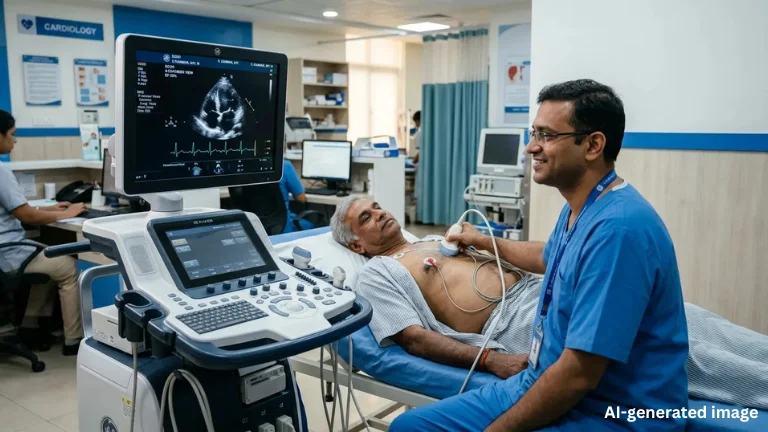
An Echocardiogram Test is one of the most commonly recommended non-invasive heart imaging procedures used to evaluate the structure and function of the heart. Doctors often advise this test when patients experience symptoms such as chest discomfort, shortness of breath, irregular heartbeat, fatigue, or suspected heart-related conditions.
Despite being widely used and considered safe, many people still ask questions like:
- Is the echocardiogram test painful?
- Are there side effects of an echocardiogram?
- Can an echocardiogram detect serious heart problems?
- Is the echo test safe for elderly patients?
- Are there any risks in the echocardiogram test?
These concerns are completely understandable, especially for first-time patients undergoing cardiac investigations. Understanding how the test works, what happens during the procedure, and whether there are any associated risks can help reduce anxiety and improve confidence before the appointment.
At Ayushman Heart & Wellness, echocardiography is commonly used as part of preventive and diagnostic cardiac evaluation to help assess overall heart health safely and effectively.
What Is an Echocardiogram Test?
An echocardiogram, often called an “echo test,” is a diagnostic imaging procedure that uses high-frequency sound waves (ultrasound) to create real-time images of the heart.
The test helps doctors evaluate:
- Heart chambers
- Heart valves
- Blood flow through the heart
- Pumping efficiency
- Heart muscle movement
- Structural abnormalities
Unlike CT scans or X-rays, an Echocardiogram Test does not use radiation, which is one of the reasons it is considered a safer heart imaging procedure.
Why Do Doctors Recommend an Echocardiogram Test?
Doctors may advise an echocardiogram for several reasons.
What Conditions Can an Echocardiogram Detect?
An echo test may help identify:
- Heart valve problems
- Weak heart-pumping function
- Congenital heart conditions
- Fluid around the heart
- Enlarged heart chambers
- Blood flow abnormalities
- Heart muscle weakness
The test is also commonly recommended for individuals experiencing:
- Chest pain
- Breathlessness
- Swelling in the legs
- High blood pressure
- Palpitations
- Dizziness
- Unexplained fatigue
Because the test provides live images of heart activity, it becomes highly useful for both diagnosis and ongoing monitoring.
Are There Any Risks in an Echocardiogram Test?
One of the most searched concerns online is:
Is the Echocardiogram Test Safe?
A standard transthoracic echocardiogram, which is the most common type, is generally considered extremely safe and non-invasive.
For most people, the procedure carries little to no risk because:
- No radiation is used
- No surgical cuts are involved
- No injections are usually required
- No recovery period is needed
- The test is painless for most patients
In routine cases, the test is performed externally using an ultrasound probe placed over the chest.
Most patients can resume normal activities immediately after the procedure.
Can an Echocardiogram Cause Side Effects?
Another common concern patients have is:
Does an Echocardiogram Have Any Side Effects?
A standard external echocardiogram rarely causes side effects. Some individuals may experience:
- Mild discomfort from probe pressure
- Temporary cold sensation from ultrasound gel
- Minor skin irritation in sensitive individuals
These effects are usually temporary and mild.
In certain specialized forms of echocardiography, such as stress echocardiograms or transesophageal echocardiograms (TEE), additional monitoring or mild sedation may be involved. In such cases, doctors carefully evaluate patient safety beforehand.
Is an Echocardiogram Painful?
Many first-time patients worry about discomfort during the procedure.
What Does an Echocardiogram Feel Like?
A standard Echocardiogram Test is generally painless. During the test:
- You lie comfortably on an examination table
- Gel is applied to the chest
- A handheld probe is moved across the chest area
- Heart images appear on a monitor in real time
Some pressure may be applied while capturing images, but the procedure is usually well tolerated by most patients.
The test typically takes around 20–45 minutes, depending on the complexity of the evaluation.
Is an Echocardiogram Safe for Elderly Patients?
This is another frequently searched question.
Yes, echocardiography is commonly performed in elderly individuals because it is non-invasive and does not expose patients to radiation.
In fact, older adults often undergo echo testing to evaluate:
- Heart valve function
- Blood circulation
- Heart muscle performance
- Heart failure risk
- Age-related cardiac changes
Since many heart conditions become more common with age, regular cardiac evaluation may help support early detection and monitoring.
Do You Need Any Preparation Before an Echocardiogram Test?
Preparation depends on the type of echocardiogram being performed.
How Should You Prepare for an Echocardiogram?
For a standard transthoracic echocardiogram:
- Usually, no fasting is required
- Comfortable clothing is recommended
- Continue medications unless advised otherwise
For stress echocardiograms or transesophageal echo tests:
- Fasting instructions may be provided
- Certain medications may be temporarily adjusted
- Additional precautions may apply
Patients are usually guided beforehand regarding preparation instructions.
How Accurate Is an Echocardiogram Test?
An echocardiogram is considered one of the most valuable tools for evaluating heart structure and function.
It may help detect:
- Valve narrowing or leakage
- Weak heart pumping
- Enlarged heart chambers
- Fluid buildup
- Congenital abnormalities
- Signs of heart failure
However, doctors may sometimes recommend additional tests such as ECG, TMT, CT angiography, or blood investigations depending on symptoms and findings.
When Should You Consider Getting an Echocardiogram?
Doctors may recommend an echo test if someone experiences:
- Shortness of breath
- Chest discomfort
- Swelling in the legs
- Unexplained fatigue
- High blood pressure
- Irregular heartbeat
- Family history of heart disease
Preventive cardiac screening may also be recommended for individuals with diabetes, cholesterol imbalance, obesity, smoking history, or previous heart conditions.
At Ayushman Heart & Wellness, echocardiography is often included as part of broader cardiac wellness evaluations focused on preventive heart care and early risk identification.
Can Anxiety Increase Fear Before an Echo Test?
Yes, many patients feel anxious before undergoing heart investigations.
How to Stay Calm Before an Echocardiogram Test?
Helpful tips include:
- Understanding the procedure beforehand
- Wearing comfortable clothes
- Arriving early to avoid stress
- Asking doctors questions openly
- Avoiding unnecessary online panic-reading
Since the test is painless and non-invasive, most individuals find the experience easier than expected.
Heart Screening Becomes Easier When You Understand the Process
An Echocardiogram Test remains one of the safest and most commonly used diagnostic tools for evaluating heart health. For most patients, the procedure is painless, radiation-free, non-invasive, and associated with minimal risk.
Understanding how the test works, why it is recommended, and what to expect during the procedure can help reduce fear and improve confidence before cardiac evaluation.
Whether recommended for preventive screening, heart symptom evaluation, or ongoing cardiac monitoring, echocardiography continues to play an important role in supporting early detection, heart function assessment, and overall cardiovascular wellness.
