

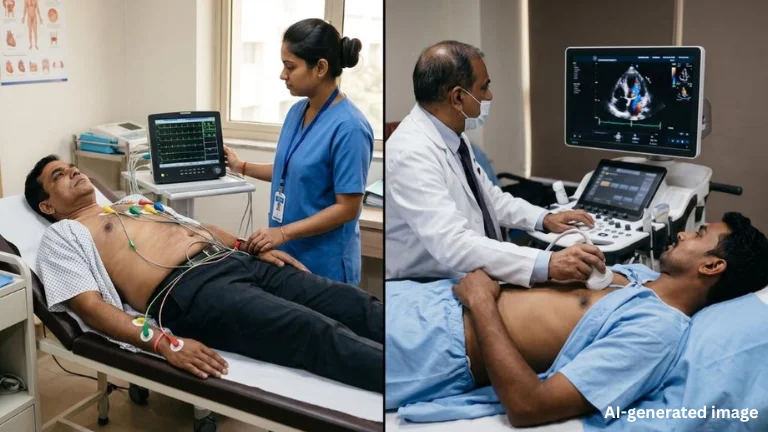
If you’ve ever been advised a heart test, you’ve probably heard terms like ECG and Echo—and wondered “which one do I actually need?”
The confusion around Electrocardiogram vs Echocardiogram is very common. Both are essential heart tests, but they check completely different aspects of your heart health.
If you’re searching for “ECG vs echo difference” or “which test is better for heart problems?”, this guide will help you understand it in the simplest way possible.
What Is the Difference Between Electrocardiogram vs Echocardiogram?
Let’s start with the basics.
Understanding Electrocardiogram vs Echocardiogram comes down to this:
- Electrocardiogram (ECG) → checks the electrical activity of the heart
- Echocardiogram (Echo) → checks the structure and function of the heart using ultrasound
In simple terms:
👉 ECG shows how your heart beats
👉 Echo shows how your heart looks and works
This is why both tests are often used together for a complete heart checkup.
What Is an ECG Test and What Does It Detect?
If you’ve asked, “What is an ECG test used for?”, here’s a simple explanation.
An ECG (Electrocardiogram):
- Records the electrical signals of your heart
- Detects irregular heart rhythms
- Identifies heart rate issues
Common conditions detected:
- Arrhythmia (irregular heartbeat)
- Heart attack signs
- Electrical conduction problems
When comparing ECG vs echo, ECG is usually the first and most basic test.
What Is an Echocardiogram and How Is It Different?
An echocardiogram uses ultrasound waves to create images of your heart.
If you’re wondering “what does an echo test show?”, it helps detect:
- Heart structure abnormalities
- Valve problems
- Blood flow issues
- Pumping efficiency
In the Electrocardiogram vs Echocardiogram comparison, Echo provides a visual understanding of heart function.
ECG vs Echo: Which Test Is More Important?
One of the most searched questions.
The truth is—both are important, but for different reasons.
ECG:
- Quick and basic screening
- Detects rhythm issues
Echo:
- Detailed analysis
- Detects structural problems
In most cases, doctors recommend both for a complete heart checkup, especially when symptoms are unclear.
When Do You Need an ECG Test?
You may need an ECG if you experience:
- Palpitations
- Chest pain
- Irregular heartbeat
- Dizziness
In the ECG vs echo discussion, ECG is often the first step in diagnosis.
When Is an Echocardiogram Recommended?
An Echo is recommended when doctors need deeper insights.
You may need it if you have:
- Suspected heart valve issues
- Shortness of breath
- Abnormal ECG results
- History of heart disease
In the Electrocardiogram vs Echocardiogram comparison, Echo is used for detailed evaluation.
Can ECG and Echo Detect the Same Problems?
Not exactly.
This is where most confusion happens.
ECG detects:
- Electrical activity issues
- Rhythm abnormalities
Echo detects:
- Structural and functional problems
That’s why relying on just one test may not give a complete picture.
Which Test Is Better for Detecting Heart Blockages?
Another frequently asked question.
- ECG may show signs of blockage indirectly
- Echo can show an impact on heart function
However, for accurate blockage detection, additional tests may be needed.
Still, understanding ECG vs. echo helps you know where each test fits.
Is ECG or Echo Painful?
Good news—both tests are non-invasive and painless.
ECG:
- Takes a few minutes
- Electrodes placed on the chest
Echo:
- Uses ultrasound gel and probe
- Takes slightly longer
Both are safe and widely used diagnostic tools.
How Long Do ECG and Echo Tests Take?
Time is another common concern.
- ECG → 5–10 minutes
- Echo → 15–30 minutes
Even though Echo takes longer, it provides more detailed insights in the Electrocardiogram vs Echocardiogram comparison.
Can ECG and Echo Detect Heart Problems Early?
Yes—and that’s their biggest advantage.
Together, they help detect:
- Early heart disease
- Rhythm issues
- Structural abnormalities
A combined approach gives a clearer picture of your heart health.
Do You Need Both ECG and Echo for a Heart Checkup?
In many cases, yes.
Doctors often recommend both tests because:
- ECG gives initial insights
- Echo confirms and explains the issue
For a complete heart checkup, both tests work best together.
How to Choose Between ECG vs Echo?
If you’re wondering “which test should I take?”, the answer depends on:
- Your symptoms
- Medical history
- Doctor’s recommendation
Instead of choosing yourself, it’s better to consult experts.
At Ayushman Heart and Wellness, patients are guided on whether they need a basic heart checkup or a more detailed evaluation.
What Are the Common Misunderstandings About ECG vs Echo?
Let’s clear a few myths:
- ECG and Echo are not the same
- One cannot replace the other
- Both serve different diagnostic purposes
Understanding the difference helps you make informed decisions.
How to Prepare for ECG and Echo Tests?
Preparation is simple:
- Wear comfortable clothing
- Avoid heavy meals before the test
- Stay relaxed
No major preparation is required for either test.
ECG vs Echo: It’s Not a Choice—It’s a Combination ❤️
When it comes to heart health, it’s not about choosing between tests—it’s about understanding what each one offers.
The difference between Electrocardiogram vs Echocardiogram lies in what they reveal:
- One checks how your heart beats
- The other shows how your heart functions
Together, they give a complete picture.
With expert guidance and diagnostic support from Ayushman Heart and Wellness, choosing the right test becomes simple and stress-free.
👉 The right insight today leads to healthier tomorrows.
