

Medically reviewed by Dr Kamaldeep Chawla, MD, DNB (Cardiology), Reg. No. 26154 · Updated [17-11-2026]
A heart attack is a medical emergency. Recognising the signs early and getting help quickly can limit damage to the heart and save a life. This guide explains the common and less obvious warning signs, what to do while waiting for help, and how a heart attack differs from cardiac arrest.
What Happens During a Heart Attack?
A heart attack (myocardial infarction) happens when blood flow to part of the heart muscle is suddenly blocked. It is usually caused by a blood clot forming on a fatty plaque in a coronary artery. Without blood, that part of the heart muscle starts to get damaged. The sooner the artery is opened, the less heart muscle is lost. That is why getting to a hospital with emergency cardiac facilities quickly matters so much.
Common Warning Signs
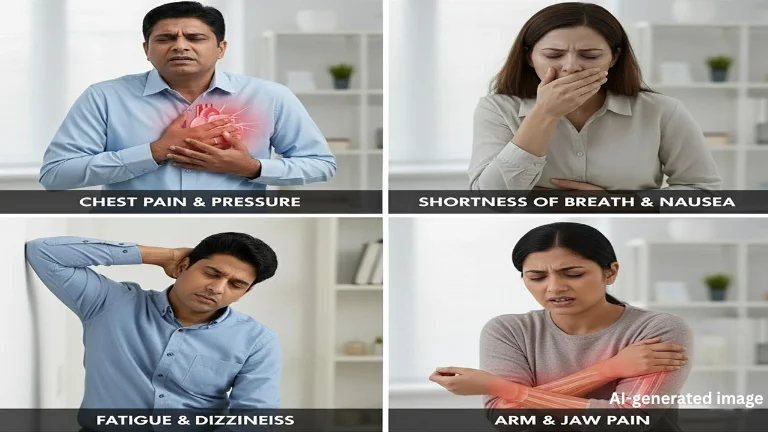
Symptoms vary from person to person. According to the NHS and the American Heart Association, they may include:
Chest pain or discomfort:
pressure, squeezing, tightness or heaviness in the centre of the chest. It may last more than a few minutes, or go away and come back.
Pain spreading to other areas:
the arm (often the left), shoulder, neck, jaw, back or upper stomach
Shortness of breath,
with or without chest discomfort
Cold sweat
Nausea, vomiting or a feeling like indigestion
Light-headedness or dizziness
Pale or grey skin
Not everyone has severe, crushing chest pain. Some people feel only mild discomfort or pressure, which can be mistaken for gas or acidity.
Signs That Are Easier to Miss
In women
Chest pain or discomfort is still the most common symptom in women. But women are somewhat more likely to also have:
- breathlessness
- nausea or vomiting
- upper stomach discomfort
- back, shoulder or jaw pain
- unusual tiredness or weakness
In people with diabetes and older adults
Symptoms can be milder or less typical. Sometimes the only signs are breathlessness, sweating, sudden tiredness or confusion.
Warning signs in the days before
Some people notice chest discomfort on exertion that is new or getting worse, or unusual tiredness, before a heart attack. Chest discomfort that is new, worsening, or happening at rest (unstable angina) needs urgent medical attention, even if it settles.
What to Do If You Suspect a Heart Attack
- Call an ambulance immediately. Tell the operator you suspect a heart attack.
- Stop all activity and sit or rest. Sit on the floor with your knees bent and back supported, or in a chair.
- Don’t drive yourself. If an ambulance is truly unavailable, have someone else drive you to the nearest hospital with emergency and cardiac care.
- Aspirin. The NHS advises taking aspirin (300 mg) if available, unless the person is allergic to it. In India, follow the advice of the doctor on whether to take it. Don’t take it if you have been told not to.
- GTN. If you have been prescribed GTN (nitroglycerin) for angina, use it as your doctor has instructed.
- Unlock the door and keep your phone nearby. If you are alone, keep someone informed.
- Keep watching. If the person stops responding and is not breathing normally, start CPR (see below).
Heart Attack vs Cardiac Arrest
| Heart attack | Cardiac arrest | |
| What it is | A circulation problem: blood flow to part of the heart is blocked | An electrical problem: the heart suddenly stops pumping effectively |
| What you see | The person is usually awake, with chest pain and other symptoms | The person collapses, does not respond, and is not breathing normally |
| What to do | Call an ambulance, keep the person resting, and follow the operator’s advice | Call an ambulance and start CPR immediately. Use an AED (defibrillator) if one is available |
A heart attack can lead to cardiac arrest, so keep watching the person closely.
Hands-only CPR for adults:
The American Heart Association describes two steps:
- Call for help (108).
- Push hard and fast in the centre of the chest, at about 100–120 compressions a minute.
Continue until help arrives or the person starts breathing normally. A CPR course is the best way to learn properly.
Why Delay Is Dangerous
People often wait because they think it is acidity, don’t want to worry their family, or hope it will pass. Delay increases the risk of:
- permanent heart muscle damage
- heart failure
- dangerous heart rhythms
If you are unsure, it is safer to get checked in an emergency department.
Lowering Your Risk
Many heart attacks are linked to risk factors that can be checked and managed:
- Know your numbers. Check blood pressure, blood sugar, and cholesterol as your doctor advises.
- Stop tobacco in all forms.
- Stay active. The WHO recommends at least 150 minutes of moderate activity a week for adults, such as 30 minutes of brisk walking on 5 days. Check with your doctor first if you have heart disease.
- Eat balanced meals, with less salt, sugar, fried and processed food, and more vegetables, fruit, pulses and whole grains.
- Limit alcohol, sleep well and manage stress.
- Take prescribed medicines regularly, and don’t stop them without advice.
People with diabetes, high blood pressure, high cholesterol, a smoking habit or a family history of early heart disease should have regular check-ups. Read more and see our full body health checkup and diabetology services.
After a Heart Attack: Ongoing Care
After hospital treatment, recovery usually includes:
- medicines
- follow-up tests
- cardiac rehabilitation
- support to manage risk factors
At Ayushman Heart & Wellness Center in \Vadodara, we offer cardiology consultations, ECG, echocardiography, and TMT for diagnosis and follow-up care. Read about our cardiology services and cardiologists in Vadodara. For non-emergency appointments, call +91 63551 19267 (Mon–Sat, 8 am–8 pm).
Frequently Asked Questions
Can a heart attack happen without chest pain?
Yes. Some people, especially women, older adults, and people with diabetes, may have mainly breathlessness, sweating, nausea, tiredness, or discomfort in the arm, jaw, or back.
How do I tell acidity from a heart attack?
It can be hard to tell, even for doctors, without an ECG and blood tests. Get emergency help if the discomfort comes with sweating, breathlessness, or pain spreading to the arm or jaw, if it is new for you, or if you have heart risk factors.
H3: Can young people have a heart attack?
Yes. It is less common, but it can happen, especially with smoking, diabetes, high cholesterol, a strong family history, or excess weight.
Should I go to a clinic or a hospital?
For suspected heart attack symptoms, go to a hospital emergency department, ideally by ambulance (108). Use clinics for routine check-ups and follow-up.
Can ESMR or other non-surgical treatments treat a heart attack?
No. A heart attack needs emergency hospital treatment. ESMR is a planned treatment for selected patients with long-standing stable angina. See Who Is Eligible for ESMR Treatment?
Disclaimer: This article is for general information and education only. It is not medical advice and does not replace emergency care or a consultation with a qualified doctor.
Sources
- NHS. Heart attack. nhs.uk
- American Heart Association. Warning Signs of a Heart Attack. heart.org
- American Heart Association. Hands-Only CPR. cpr.heart.org
- World Health Organization. Physical activity – fact sheet. who.int
